Gut Microbiome Testing Kits: The Honest Review
Photograph: Adobe Stock, licensed 27 August 2026. What you are actually buying is a lab run, which is why the method matters more than the box.
Let me lead with the conclusion, because it is the most useful thing on this page: for most people, an at-home gut test is not worth the money. Not because the technology is fake, but because the science cannot yet turn your results into reliable, personalized advice. I will explain exactly why, then review the three brands for the smaller group who still have a good reason to test.
Why the honest answer is usually "skip it"
These tests sequence the bacteria in a stool sample and hand you a report. The problem is what the report can mean. Research keeps showing there is no single blueprint for a "healthy" microbiome. Two very healthy people can have wildly different gut bacteria, and sometimes a sick person's microbiome looks nearly identical to a healthy person's. When there is no clear target, a snapshot of your bugs is hard to act on.
Your results also shift with what you ate last week, so a single snapshot is a moving target. For the price of one kit, you could buy months of the fiber and fermented foods that actually move the needle.
When testing might make sense
A few honest exceptions: you are the kind of person who stays motivated by data and will act on it; you want a baseline and a retest to see whether a diet change shifted your diversity; or you are working with a clinician who will help interpret the numbers. If that is you, here is how the three brands compare.
The three brands worth knowing
Viome Gut Intelligence, $279 (most detailed method)
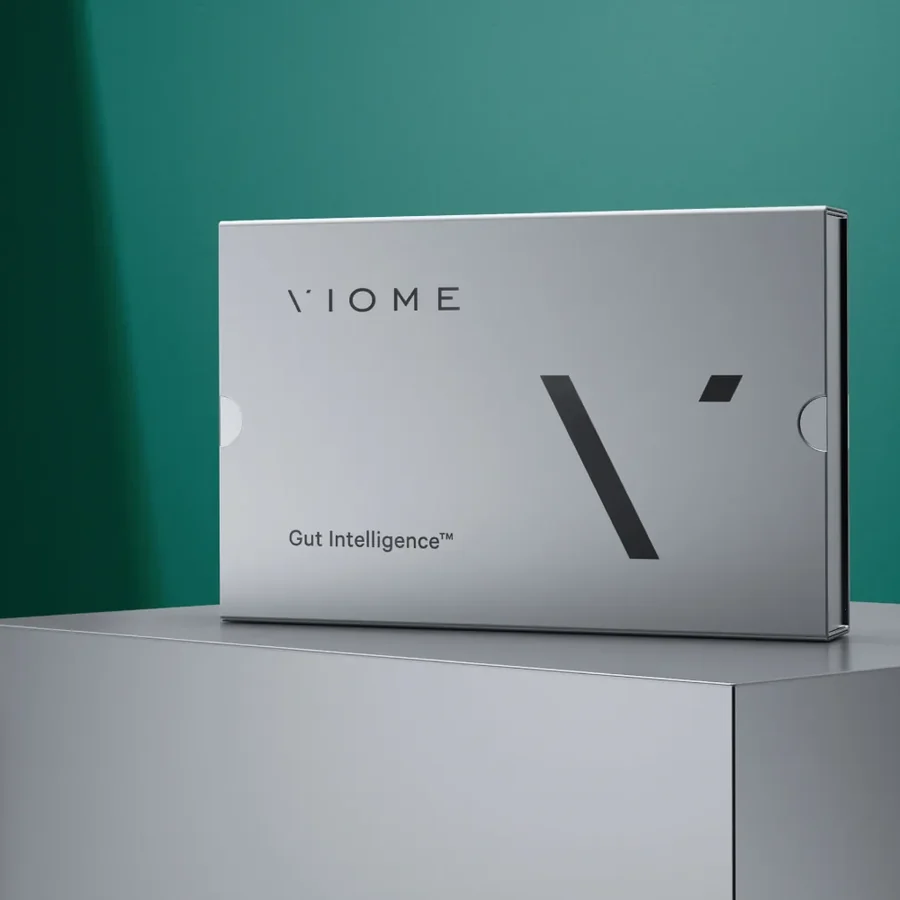
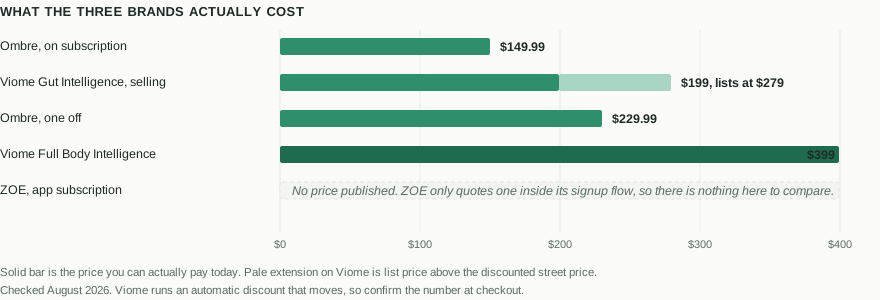
Viome uses RNA sequencing, which aims to capture what your microbes are actively doing, not just which ones are present, and also looks at fungi and viruses. On paper it is the most sophisticated method, and it produces the most granular food scoring. Retests are around $229. The $279 is list: at the time of checking, Viome was selling it at $199.
The honest limit: more data is not the same as more useful data. The personalized "eat this, avoid that" food lists are proprietary and not well validated against long-term health outcomes. You are paying a premium for depth whose real-world payoff is unproven.
Viome Full Body Intelligence, $399 (the upsell, and usually skippable)

Full Body Intelligence is the same gut test with two things bolted on: an oral swab for your mouth microbiome, and a blood sample that Viome turns into cellular scores and a "biological age" number. It costs $120 more than Gut Intelligence at list, and it has been discounting in step, $299 against Gut Intelligence's $199.
The honest limit: the extra $120 buys the weakest part of the product. Biological age scores are not a validated clinical measure, different companies calculate them differently, and the same person can get different ages from different tests in the same week. The oral microbiome data is real but there is little you can do with it beyond ordinary dental advice. If the gut test's food scoring is already unproven, the add-ons are a further step away from anything you can act on.
Ombre, $229.99 (the simplest method, no longer the cheap one)
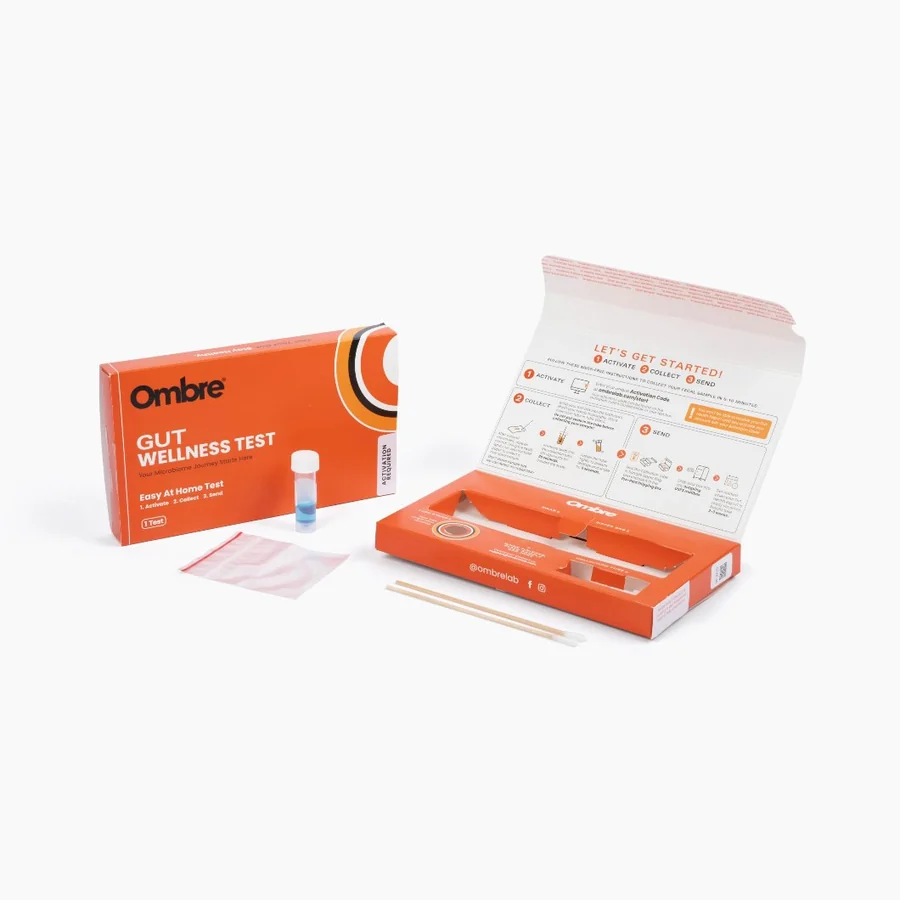
Ombre uses 16S rRNA sequencing, which identifies which bacteria are present. It tells you about the diversity and balance of your microbiome and gives food suggestions. It is the most straightforward of the three to read.
The honest limit: 16S tells you who is there, not what they are doing, and the food advice is general. That was an easy trade to accept when this was the cheap kit. It is a harder one now.
One practical note that applies to both Viome tests and to neither of the others: Viome takes HSA and FSA money at checkout through TrueMed, which knocks roughly 30 percent off if you qualify. Ombre and ZOE do not offer it. That is a real saving on a purchase you had already decided to make, and a bad reason to make one you had not. We work through the math and the trap on our HSA and FSA page.
ZOE, subscription (nutrition coaching focus)

ZOE is less a one-time gut test and more an ongoing program, and it is the one thing on this page we have to update rather than reprice. ZOE used to send you cookies to eat, a finger-prick blood kit, and a continuous glucose monitor, and measure your blood-fat and blood-sugar responses directly. It does not any more. ZOE's own FAQ now says the kit is a stool sample and nothing else, and that its algorithm predicts your blood fat and glucose response from the microbiome data instead: in their words, you "no longer need to eat cookies, take a blood sample, or wear a continuous glucose monitor." If you came here because you wanted your actual measured responses to food, that product no longer exists.
Two other things worth knowing before you look. The test is sold only with an app subscription, so there is no one-off kit price to compare against Viome or Ombre. And ZOE is mid-relaunch, advertising a next-generation kit and app as coming soon, which is a reason to wait rather than a reason to buy. We are not quoting a price here because ZOE does not publish one without putting you through its signup flow first, and we are not going to print a number we could not verify on their site.
The honest limit is now sharper than it was. It is still the most expensive to keep going, and a good chunk of its advice, eat more whole plants and fewer ultra-processed foods, is sound but not exactly a secret. But dropping the blood and glucose testing removes the thing that made ZOE meaningfully different from a microbiome test with good coaching attached. ZOE argues its 300,000-profile database makes the prediction good enough. That may be true. It is also a claim you are being asked to take on trust, in place of a measurement you used to get.
Our verdict
Most people should save the money and spend it on fiber and fermented foods instead. The advice a test will give you is largely the advice on this site, for free.
If you are testing anyway: there is no longer a cheap option, only a least-expensive one. Ombre on subscription, $149.99, is the lowest price on this page and the simplest report to read. Viome Gut Intelligence, $279 list and lately $199, if you specifically want the RNA method and do not mind paying for depth. Skip the $399 Full Body Intelligence unless you actually want the oral and blood add-ons. ZOE only if you want ongoing coaching and you are comfortable that it now predicts your blood-fat and glucose responses rather than measuring them.
If you have real gut symptoms, see a doctor and get proper testing. A wellness kit is not a diagnosis.